Monday, November 2, 2009

The Warning


For any of those who missed it, a few weeks back the PBS news magazine Frontline ran a fascinating yet disturbing report on how a warning was ignored about the dangers of unregulated OTC derivatives markets, markets eventually made infamous for the toxic assets which nearly brought down the global financial system.

The report told the story of one Brooksley Born, an accomplished lawyer and the head of the CFTC (Commodities and Futures Trading Commission) under President Clinton. Born became very concerned about the danger of unregulated derivatives markets after incidents like the Banker’s Trust derivatives fiasco of the early ‘90s which showed how opaque these markets were - indeed they were referred to as a black box. Born thought it a good idea to open the box and peer in with a flashlight to see what was going on. As the head of the CFTC, she had the authority to act on derivatives regulation - authority that only Congress could take away. Treasury Secretary Rubin, Fed Chairman Greenspan, and SEC Chairman Levitt became so concerned that Born was going to act on her authority that they called for hearings to strip the CFTC Chair of that authority. They hauled Born in front of the Senate Finance Committee where she was put through the ringer. “What are you trying to protect?” she was asked over and over again as Rubin, Greenspan, Levitt and Larry Summers looked on. She replied “We are trying to protect the money of the American public.”

A decade later the money of the American public put at risk by unregulated derivatives would be on the order of trillions of dollars.

Brooksley Born used reasoned arguments to convey the urgent need for derivatives regulation. She was stopped by those who felt their financial interests being threatened.

And isn’t that exactly what’s been going on for the last 30 years around the issue of climate change? For decades scientists and others have been issuing warning after warning, with ever increasing urgency - and the response from most politicians has been “Where’s the risk? I don’t see any problem.” And the reason for inaction is the same – financial interest.

Rubin, Greenspan and Summers have never admitted error in the Born affair. But Arthur Levitt has spoken out. He admits he was swayed by Rubin and Greenspan. “I was told she was irascible difficult, stubborn and unreasonable.” He now calls Born one of the finest public servants he has ever come to know, and he regrets his actions against her. “I should have acted differently. I could have made a difference.”

Monday, October 19, 2009

Quotes on Copenhagen


The latest quote on Copenhagen comes from the U.K. Prime Minister Gordon Brown who said today, “There are now fewer than 50 days to set the course of the next few decades. We cannot afford to fail. If we fail now, we will pay a heavy price ... If we falter, the Earth will itself be at risk.”

Britain seems to understand the fact that the upcoming December climate conference in Copenhagen is a big deal. Having an agreement to control CO2 and build a sustainable global economy in the 21st century is urgently needed. And this is understood not just by Britons but by Europeans in general. A quote earlier this year by the EU Minister for the Environment Stavros Dimas supports this: “Copenhagen (is) the world’s last chance to stop climate change before it passes the point of no return.”

Yet we in the U.S. don't seem to get it. And it’s not just our ineffectual Congress which fails to sense the urgency. Here is a quote from Steven Chu, the current U.S. Secretary of Energy: “Let's not make (Copenhagen) the be-all, end-all and say if it doesn't happen that we're doomed. We can come back in two to four years' time.”

We are seeing very different levels of resolve emanating from the European and American governments. If it is unclear that the time to act is now, two things are clear: 1.) the latest scientific observations tell us that climate change is happening faster than earlier predicted, and 2.) the longer the U.S. waits to begin building a clean-energy economy, the further behind we will find ourselves.

One final quote: “The nation that leads the world in creating new energy sources will be the nation that leads the 21st century global economy. America can be that nation. America must be that nation.”

This quote comes from President Barack Obama who spoke these words before a joint session of Congress last winter. Americans must ask ourselves, what makes it more likely that we will be that nation, a Copenhagen conference that succeeds in getting a global agreement on greenhouse gas reductions, or one that fails? The answer may bring to the American political psyche the sense of urgency that has been sorely lacking.

Friday, October 2, 2009

Addressing Climate Change – Bioengineering or Biomimicry


An article in the September 28th issue of the New Yorker entitled “A Life of Its Own” by Michael Specter got me thinking about how genetic research may play an important role in addressing the issue of human-induced climate change. Climate change is the consequence of a global industrial system that doesn’t behave in the same way the natural world does. Microbiology may provide clues to addressing this misalignment. But within the field two distinct camps are forming on how to do this - on the one hand you have the bioengineers and on the other the biomimics. The bioengineers say we need to learn from biological systems in order to adapt and align those systems to human aims. The biomimics say we need to learn from biological systems in order to adapt and align human aims to those systems. Two very different points of view, yet whose work often overlaps.

The fields of microbiology and genetics were built on shoulders of evolutionary theory. Darwin's theory changed the scientific view of the biosphere from one distinctly anthropocentric - man in the image of the creator having dominion over all living things – to one of an appreciation for a system - the biosphere as a complex, interdependent and evolving system of which mankind is a component. Darwin’s theory became a fundamental tool in bringing forth new knowledge about every aspect of the earth’s biosphere, from paleontology to botany to genetics. Darwin’s theory of evolution represented a great leap forward in systems thinking.

Over the last 50 years a new theory regarding the biosphere - perhaps as powerful as Darwin’s Theory of Evolution - has been emerging. It is the theory of anthropogenic climate change. Darwin’s theory showed that the biosphere was a system, and now climate change theory points to the central role of industrialization in dominating and changing that system.

Microbiology and genetics are being applied to address this problem. The bioengineers are looking to genetically engineer microbes that can absorb CO2 or excrete biofuels. The biomimics are looking for ways to recreate natural processes like photosynthesis but on a scale and with an efficiency that will transform current human activities.

The bioengineers believe, as reported in the New Yorker article, that synthetic biology can dispense with nature entirely by dismantling different organisms and using disparate genetic components to create custom-built packages of DNA. “We have gotten to the point in history where we simply do not have to accept what nature has given us,” Jay Keasling a professor of biochemical engineering at UC Berkeley is quoted as saying. Bioengineers believe humanity need no longer rely on the whims of nature to address the world’s pressing crises. “You need this drug: O.K. we pull this piece, this part, and this one off the shelf. You put them into a microbe, and two weeks later out comes your product.”

Proponents of biomimicry have a different view. As Janine Benyus writes in her book BIOMIMICRY, the field of biomimicry sees nature as the model, measure, and mentor for human development and advancement. This includes understanding the consequences of cooperative relationships, dense interconnectedness, and self-regulating feedback cycles. Wisdom resides in the whole, and organisms are adapted to place. There is more to discover in how nature works than we can possibly invent.

And the biomimicry advocates are wary of their bioengineering counterparts. Benyus writes in the introduction to her book “Now that we can synthesize what we need and rearrange the genetic alphabet to our liking, we have gained what we think is autonomy. Strapped to our juggernaut of technology, we fancy ourselves as gods, very far from home indeed. In reality, we haven’t escaped the gravity of life at all. We are still beholden to ecological laws, the same as any other life-form.”

Bioengineering holds the promise of great power to advance human civilization, but does that power threaten our very existence? Even bioengineers recognize that risks exist. Drew Endy, a professor of biological engineering at Stanford says “If the society that powered this technology collapses in some way, we would go extinct pretty quickly. You wouldn’t have a chance to revert back to the farm or to the pre-farm. We would just be gone.”

Humans have encountered tools of incredible power before – energy tools like fossil fuels and nuclear fission, and information and communications tools like computers, telephones and the internet. The extent to which these tools are out of alignment with the earth as a system (excess CO2, nuclear waste) the greater the long-term problems they have posed. The extent to which these tools have been in alignment with the earth as system (information intensity enabling resource efficiency) the more sustainable these tools make human industrialization.

As the world grapples with the increasingly urgent issue of human-induced climate change, what have we learned? Does climate change teach us that we need to align natural systems to human aims as bioengineering advocates, or align human aims to natural systems as biomimicry points to?

Monday, August 24, 2009

Baseball and Sustainability Part II

Michael Lewis’ book Moneyball was about a lot more than a new way of looking at the management of a baseball team. It was about an appreciation for systems thinking. It was about an understanding of statistics and variation. It was about new knowledge and its genesis. And it was about human psychology. The thesis of Moneyball was complex, yet it struck a chord of familiarity with me.

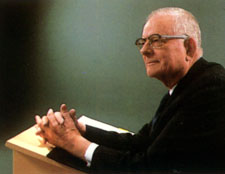
Nearly two decades ago I had become familiar with these themes as I sat in a class at Columbia University’s Graduate School of Business. The professor was a ninety year-old man named W. Edwards Deming.
Known alternatively as “the man who taught the Japanese about quality” or “the father of TQM” (total quality management), Deming rejected these characterizations saying “I never taught the Japanese about quality, I introduced them to the principles of a system.” The appreciation of those principles directly resulted in what has been called the Japanese Economic Miracle and Deming’s role was central. To this day the highest honor for business excellence in Japan is The Deming Prize.

In his classes Deming talked about a system of transformation that would be necessary to make America competitive again. He called it a system of a profound knowledge and it contained four interconnected and interdependent components:
- Appreciation for a System
- Knowledge of Variation
- Theory of Knowledge
- Knowledge of Psychology

What Michael Lewis wrote about in a baseball context was what Deming called profound knowledge. Deming applied it not to sports but primarily to the social enterprise of business. The Japanese listened and thrived. Toyota is a great example of a company run using profound knowledge. Deming was very critical of American management which largely ignored him. GM may have dabbled in Deming here and there, tweaking around the edges, but they never embraced profound knowledge as a system. Critics of Deming - especially American critics - say he cared about soft things like human motivation, interdependence, and alignment of aims - and he ignored the harder issues that American managers are up against every day - like profitability and stock price. But you have to ask yourself, whose stock would you rather own today, Toyota or GM?

Applying profound knowledge to baseball is fun, and applying it to American business is important. But there is a more urgent application for profound knowledge in the 21st century. Today’s global economy requires transformation. Addressing climate change and building a sustainable global economic system will be the organizing principles of the 21st century. Climate change is not a problem as much as a symptom – a symptom of a misalignment between two very powerful systems, the planet earth and the global economy that is embedded within it.
To address climate change it must be viewed from a systems perspective, where the planet is the system, and the global economy is a sub-process – a very powerful subsystem – within the system. Using Deming’s systems approach, where each component must align with the aim of the overall system, the global economy must be aligned with the aim of the planet. Failure to do so can result in sub-optimization, decay and the ultimate destruction of the system.

Human civilization has been aligning these two systems for centuries - but getting it backwards. For a very long time we have been putting the earth in service of the human economy, instead of aligning the human economy with workings of the earth. Getting this right has wide implications for how we power our economy, how we feed ourselves, and how we develop and grow. In aligning with the planet’s ecosystem we will find how to (1) live on current energy income (i.e. renewable energy), (2) operate with the knowledge that waste = food (i.e. closed loop recycling,) and (3) become information intense and energy efficient (as biological systems are.)

Tuesday, August 18, 2009

Baseball & Sustainability - Part I


It is summer. Minds turn to baseball as they have since that first game in Hoboken, New Jersey back in 1846. Baseball and its limited set of rules have been around for a long time. So it is stunning to think that after 150 years of one way of looking at baseball, new knowledge could come forth. But that's exactly what has been happening over the last decade. New knowledge about baseball. New ways of looking at something old, new opportunities for creating something very different, something better.

Where does new knowledge comes from? A wise man once said it comes from the innately curious individual who is responsible to no one. That describes a very special kind of person. A scientist perhaps, a thought leader, maybe an independent business person. It certainly describes Bill James, a man who set out to show the world that the way baseball was being managed at the professional level was idiotic. James published an independent journal about baseball emphasizing new ways of looking at information long ignored by the powers that be in MLB (Major League Baseball). James felt that the aim of management of baseball ought not to be about results - the most Home runs, RBI's, or wins. Not at all. The aim of managing a baseball team is understanding the process by which you get a player on base. Once a manager mastered that, the runs and wins would take care of themselves.

Realizing baseball as a process has a huge effect on what the definition of "doing a good job" means - with its implications for reward systems. For example, if baseball is only about results, then a batter who strikes out a lot makes no contribution to the team and is thus not rewarded. But if baseball is about process, then if a batter in striking out forces opposing pitchers to throw 15 or 20 pitches then he is making an extremely valuable contribution to the team. There may be no measure of this in the box score, but wearing down opposing pitchers arms is essential to winning games.

James and his independent journal The Bill James Handbook were covered at length in the book by Michael Lewis "MoneyBall."


Lewis showed how a team with one of the lowest payrolls in baseball, the Oakland A's, was able to achieve over a 10-year period one of the best regular season win-loss records in the major leagues, by employing the new knowledge of independent thinkers like Bill James.

If the limited sphere of baseball presents fertile ground for new knowledge how much more of an opportunity might exist in the sphere of business? If baseball managers, scouts and commentators were myopically focused on home runs, RBI's, and wins, business managers, analysts and reporters are no less focused on marketshare, quarterly earnings and stock price. Wouldn't it be great if someone could come along in business as James did in baseball and shake things up? Perhaps an independently thinking analyst could show how management in a business-as-usual mindset was missing out on great opportunities? Instead of managing with the aim of increasing market share, profit or stock price, what if management's aim was understanding their business as a system for producing the best value of good or service? What if an improved financial position was seen as the consequence - rather than the aim - of a corporate strategy? But that's not today's reality. Many in the greek chorus of business - as seen on CNBC and Bloomberg TV every day - are as fascinated by the market's daily spikes and plunges as baseball insiders are by home runs and high scoring games. How can a culture focused on financial results be transformed to focus instead on the means from which those results ensue? Isn't that what sustainability is all about? (Continued in Part II.)

Monday, July 13, 2009

Study and Management of Home


Paul Krugman, the Nobel Laureate and NY Times columnist, wrote in today's Times about the slow emergencies our nation and planet face in the economic and ecological spheres. We seem to manage these problems based on their symptoms rather than on theory or knowledge, often making our actions too little too late.

One thing Krugman did not emphasize, but of which he is all too aware, is the tension between addressing the economy vs. the ecology. One of the reasons the Waxman-Markey climate bill that passed the House of Representatives on June 26th was so weak was because of this perceived tension.

However, these issues are not in tension at all, but are in fact aligned. Going back to the root meanings of the words economy and ecology we find that from the Greek economy means 'the management of home' and ecology 'the study of home'. Since when has the management of a subject not required study? How can we expect good management without knowledge? As if it is not obvious, economy requires ecology.

Economy and ecology come into alignment when we realize that the problems of the 21st century are going to be about managing resources to live sustainably. When we realize that the problems we face are systems problems, we will see the system as the earth and everything else as a subsystem within the earth system thus requiring alignment to the workings of the earth system.

For centuries human beings have put the earth in service of the human activity, now with knowledge we must begin to put human activity in service of and alignment with the earth.

Wednesday, July 8, 2009

The Bumpy Road to Copenhagen

Photo: Jason Reed/Reuters.
As the New York Times reported on its website today, the G-8 nations have failed to reach an agreement on goals for eliminating Greenhouse Gases. One observer even claimed that - gasp - President Obama was doing no better the George W. Bush on this score. That's a pretty low bar when it comes to climate change on the international stage.